

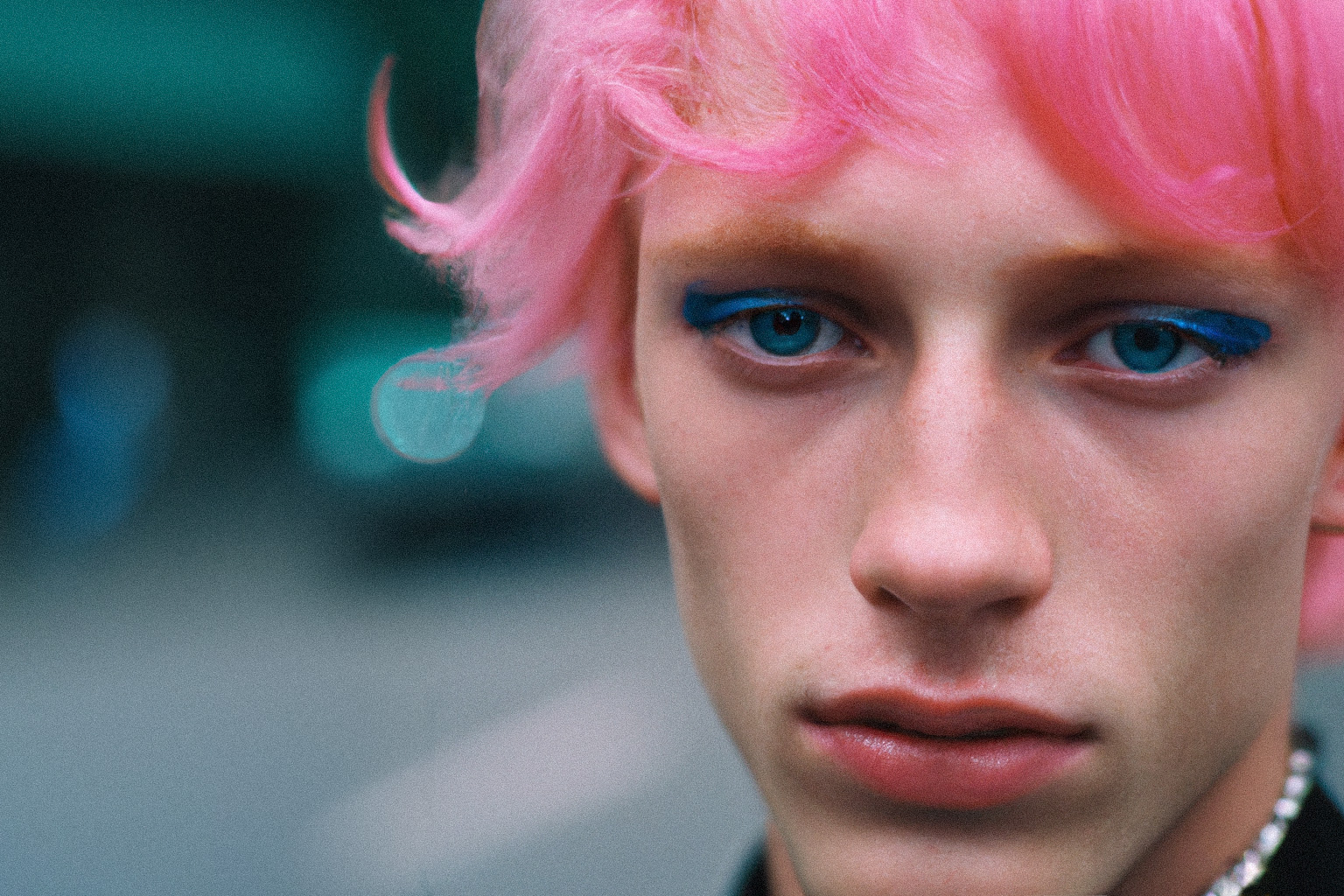
Mika Bar-ON Nesher: How would you describe Post-Photography?
Blake Wood: Post-Photography is a style of art in which digital images are created through AI and machine learning. It coincides with the emergence of early AI collaborative tools like ArtBreeder, that works by remixing existing images uploaded by the artist and more recent tools like DALL•E 2 and Stable Diffusion, that convert text to pixels using deep learning and artists’ written prompts. Post-photography is post-camera. It can bypass the camera apparatus all together, learning and pulling from billions of images of humanity’s photographic history and then instantly composing an image from the artists’ desired prompt.
MBON: How do you think the photographic process changes when there is no physical subject?
BW: I think my photographic process changes in that my portraits can start with broader concepts i.e. memories, experiences, future events, but I’m still able to create a sense of closeness to the subject. When working with AI, I choose my location, tools and subjects. The true freedom I have to create anything can be daunting, because the possibilities are endless, but that ability alone opens you up to explore so many ideas that you would’ve never been able to otherwise.
MBON: How do you view the role of curation in the cryptoart space?
BW: Curation is extremely important in crypto art. It helps identify artworks’ cultural value, quality of the work, its connection to art history and art movements, also displaying and arranging of the work itself, as well as educating a wider audience to new concepts within cryptoart in an intelligible way. Curation can also bring traditional art institutions, collectors and liquidity to the space, which strengths the ecosystem overall.
MBON: Who are some photographers working in post-photography you appreciate?
BW: The first photographer I came across that was exploring post-photography was GANBrood, aka, Bas Uterwijk. He was working with ArtBreeder in 2020, creating imagined portraits of people by remixing two or more image inputs. His portraits of historical figures before cameras existed really stand out to me. Another artist I appreciate is Claudia Pawlak, who creates botanicals with AI and prints these images as cyanotypes by hand. Prompt-based AI tools have reached the level in which outputs can be indistinguishable from traditional photographs. Artists are now exploring more and the post-photography movement is really growing.